
Top Traditional Halal Sweets from Around the World
Sweets have always held a special place in cultures worldwide, and for Muslims, enjoying Halal desserts ensures that these treats comply with Islamic dietary laws. From the rich pastries of the Middle East to the fragrant confections of South Asia, Halal sweets are a delightful blend of flavors, textures, and traditions. Here’s a guide to some of the most beloved traditional Halal sweets from around the world.
1. Baklava – Middle East
Baklava is a rich, flaky pastry made from layers of phyllo dough, chopped nuts, and sweet syrup or honey.
Ingredients:
-
Phyllo pastry sheets
-
Chopped nuts: pistachios, walnuts, or almonds
-
Halal-certified butter
-
Sugar and water syrup, sometimes flavored with rosewater or lemon
Why it’s special: Baklava is crunchy, sweet, and indulgent. Halal-certified butter ensures compliance, and it’s often served during celebrations or festive occasions.
2. Gulab Jamun – South Asia
Gulab Jamun is a deep-fried milk-based sweet soaked in fragrant sugar syrup, popular in India, Pakistan, and Bangladesh.
Ingredients:
-
Khoya (reduced milk solids) or milk powder
-
All-purpose flour
-
Halal oil for frying
-
Sugar syrup flavored with cardamom and rosewater
Why it’s special: Soft, melt-in-your-mouth gulab jamuns are a staple at weddings, Eid, and special gatherings. Using Halal-certified ingredients makes it fully permissible.
3. Maamoul – Middle East
Maamoul are small, filled shortbread cookies from the Levant, often enjoyed during religious holidays like Eid.
Ingredients:
-
Semolina or wheat flour
-
Halal butter or ghee
-
Fillings: dates, walnuts, or pistachios
-
Optional sugar dusting
Why it’s special: Maamoul combines a crumbly texture with a sweet, nutty filling. They are culturally significant and naturally Halal when prepared with the right ingredients.
4. Kunafa – Middle East
Kunafa is a Middle Eastern dessert made with shredded phyllo dough or semolina, layered with cheese or cream, and soaked in sweet syrup.
Ingredients:
-
Kataifi (shredded phyllo dough) or semolina
-
Halal-certified cheese or cream
-
Butter
-
Sugar syrup flavored with rosewater or orange blossom
Why it’s special: Kunafa is rich, sweet, and served warm. It’s a festive dessert often enjoyed during Ramadan or family gatherings.
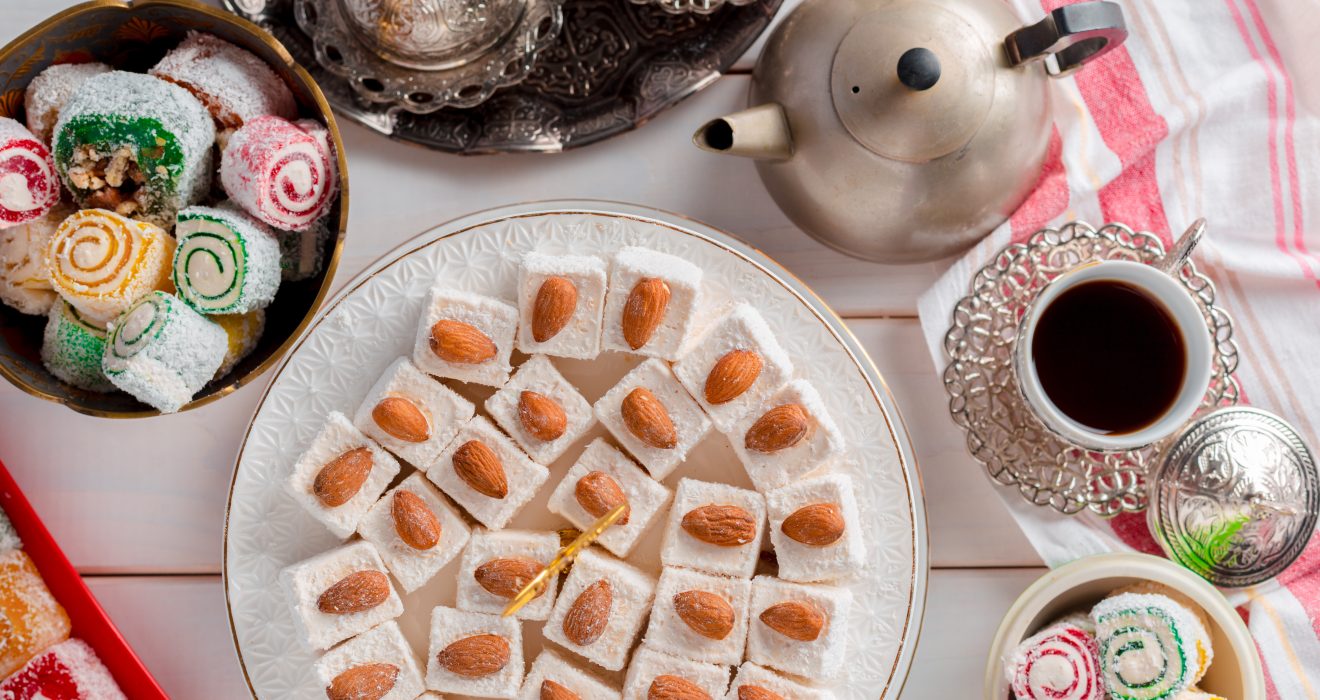
5. Turkish Delight (Lokum) – Turkey
Turkish Delight is a chewy, fragrant confection dusted with powdered sugar or coconut.
Ingredients:
-
Sugar
-
Cornstarch
-
Water
-
Nuts (pistachios, hazelnuts)
-
Natural flavorings: rosewater, lemon, or orange
Why it’s special: Lokum is soft, aromatic, and naturally Halal. It’s often given as a gift or served with tea.
6. Halwa – South Asia & Middle East
Halwa is a broad category of sweet, dense desserts made from semolina, lentils, or carrots, often enriched with nuts and ghee.
Popular Variants:
-
Sooji Halwa: Made from semolina, sugar, ghee, and cardamom.
-
Gajar Halwa: Carrot-based, cooked with milk, sugar, and ghee.
-
Besan Halwa: Made from chickpea flour and ghee.
Why it’s special: Halwa is rich, comforting, and often prepared for festivals, special occasions, and family gatherings. Using Halal-certified ghee or butter ensures compliance.
7. Qatayef – Middle East
Qatayef are stuffed pancakes traditionally made during Ramadan. They can be filled with nuts, cheese, or sweet cream.
Ingredients:
-
Pancake batter: flour, water, sugar
-
Fillings: walnuts, pistachios, or sweet cheese
-
Halal oil for frying or baking
-
Sugar syrup for soaking
Why it’s special: Qatayef is a Ramadan favorite, sweet, aromatic, and fully Halal when prepared correctly.
8. Mochi – Japan
Mochi is a chewy rice cake made from glutinous rice flour, sometimes filled with sweet fillings like red bean paste.
Ingredients:
-
Glutinous rice flour
-
Sugar
-
Halal fillings: sweetened red bean paste, coconut, or chocolate
-
Cornstarch for dusting
Why it’s special: Mochi is soft, chewy, and naturally Halal-friendly. It’s enjoyed as a snack or dessert in Japanese culture and can be adapted with Halal-certified ingredients.
9. Kaju Katli – India
Kaju Katli is a diamond-shaped cashew fudge that is smooth, rich, and melt-in-your-mouth delicious.
Ingredients:
-
Cashew nuts
-
Sugar
-
Halal-certified ghee
-
Optional cardamom for flavor
Why it’s special: Kaju Katli is a festive sweet, often served during Diwali and other celebrations. Using Halal ghee makes it fully permissible.
10. Basbousa – Middle East
Basbousa is a semolina cake soaked in syrup, popular in Egypt, Lebanon, and other Middle Eastern countries.
Ingredients:
-
Semolina
-
Sugar
-
Halal butter or ghee
-
Yogurt
-
Sugar syrup flavored with rosewater or orange blossom
Why it’s special: Basbousa is soft, sweet, and aromatic. It’s commonly prepared for gatherings and special occasions and is fully Halal when using the correct ingredients.
Tips for Making or Buying Traditional Halal Sweets
-
Check Halal Certification: Ensure ghee, butter, milk, and other ingredients are Halal-certified.
-
Avoid Alcohol-Based Flavorings: Some sweets may contain rum or other alcohol extracts—use alternatives like rosewater or vanilla essence.
-
Use Fresh Nuts and Fruits: Adds natural sweetness, texture, and nutritional value.
-
Control Sugar Levels: Traditional sweets can be very sweet; adjust sugar to taste while keeping them Halal.
-
Store Properly: Most Halal sweets stay fresh in airtight containers; refrigerate if necessary.
Conclusion
Traditional Halal sweets are a celebration of flavor, culture, and creativity. From the nutty richness of Baklava and Maamoul to the creamy indulgence of Kunafa, the chewy delight of Mochi, and the festive charm of Gulab Jamun and Kaju Katli, these desserts span the globe while adhering to Islamic dietary laws.
Whether prepared at home or bought from trusted Halal-certified bakeries, these sweets allow Muslims to enjoy the richness of global culinary traditions without compromising their faith. Indulge in these treats during special occasions, festive gatherings, or as a simple daily delight, and experience the joy of Halal sweets from around the world.